



Safety Systems & Forms
Confined space entry permit: when the law requires one, what it must say, and the standby person
By Christian Tietzel · 11 November 2026

A confined space entry permit is a written authorisation, completed by a competent person, that must be issued before a business directs a worker into a confined space. It names the space, the people allowed to enter, the period of the work and the risk controls, and it has a section signed at the end to confirm the work is finished and everyone is out.
It is the one work permit Australian WHS law names. Regulation 67 of the model WHS Regulations requires it everywhere they apply, and Victoria’s own OHS Regulations require an entry permit too. The free workbook further down carries a confined space entry permit sheet and a register.
What counts as a confined space
The model WHS Regulations, carried in Queensland’s Work Health and Safety Regulation 2011, define a confined space by four features together, which SafeWork NSW’s confined spaces page summarises well. It is an enclosed or partially enclosed space that:
- is “not designed to be occupied by a person”;
- is at normal atmospheric pressure while someone is in it; and
- is, or is likely to be, a risk to health and safety from an atmosphere without a safe oxygen level, from contaminants that could cause fire or explosion, from harmful concentrations of airborne contaminants, or from engulfment.
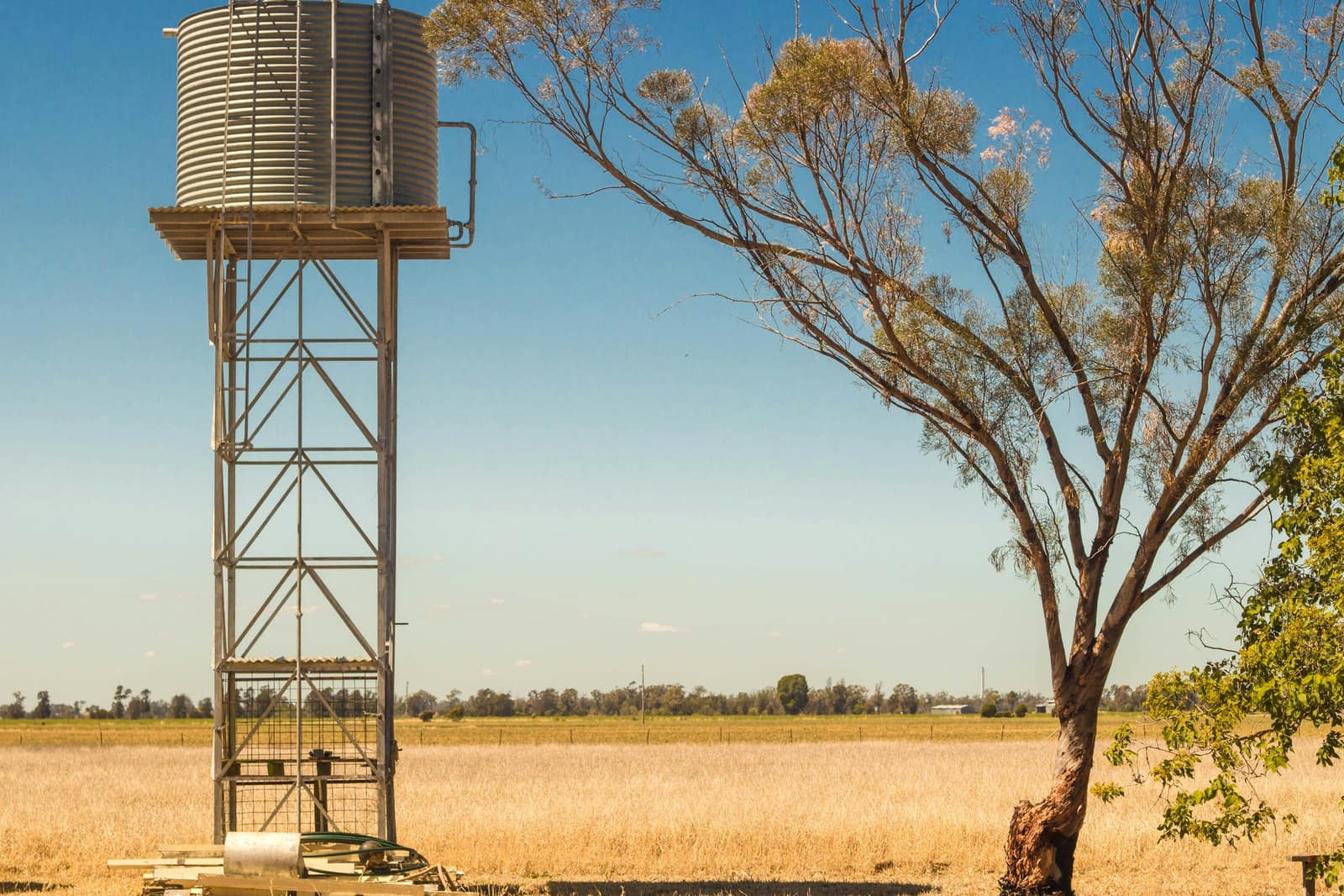
SafeWork NSW lists the usual suspects as “vats, tanks, pits, pipes, ducts, flues, chimneys, silos”. WorkSafe Victoria’s confined spaces basics adds storage tanks and tank cars, pits and degreasers, sewers and sewer pump stations, wet and dry wells, shafts and tunnels. On farms, WorkSafe Victoria’s farm alert names hoppers, grain silos, vats, tanks and manure pits.
What does not count matters as much. SafeWork NSW excludes “a mine shaft or the workings of a mine”, and spaces designed for occasional occupancy, giving “a fumigated shipping container or a cool store” as examples; those are still hazardous, just managed under other duties. The test is the four features, not the label, and an open end does not settle it: WorkSafe Victoria’s confined spaces alert records an apprentice who died in October 2018 while working in an open-ended tanker.
The regulation applies to a space that is entered, that is intended or likely to be entered, and to one that could be entered by accident, which is why an unlocked pit lid is a confined space problem before anyone plans to go in.
When the permit is required, and what it must say
Regulation 67 is short. A business must not direct a worker to enter a confined space to carry out work unless it has issued a confined space entry permit for that work. The permit must be completed by a competent person, be in writing, and state:
| The permit must state | In practice |
|---|---|
| The confined space it covers | The space by name, location and tag number, not “the tank” |
| The names of the persons permitted to enter | Every entrant by name; anyone not listed does not go in |
| The period of the work | A start and an end; a new period means a new permit |
| The measures to control risk | Taken from the written risk assessment regulation 66 requires |
| A space for an acknowledgement | That the work is complete and all workers have left the space |
When the work is done, the business must make sure all workers have left the space and the competent person completes that acknowledgement. Regulation 63 carves out one exception: regulations 67 and 68 do not apply to an emergency service worker entering to rescue someone or give first aid.
Victoria runs its own law, the Occupational Health and Safety Regulations 2017, and reaches the same place. WorkSafe Victoria’s alert says workers “do not enter a confined space unless they have been issued with an entry permit for the space”, and its infringement offences list includes an employer failing to keep confined space entry permits and failing to keep a record of exit from a confined space. Victoria’s confined spaces compliance code, in effect since 15 March 2018, includes a sample entry permit; in the model WHS states, SafeWork NSW points to the example permit in Annex C of the confined spaces code of practice.
The controls the permit must point to
The permit is the summary. The controls behind it come from regulations 66 to 76, and a permit that does not reference them is a signature on an empty page.

The written risk assessment (regulation 66). Done by a competent person, it must consider whether the work can be done without entering the space at all, the nature of the space, changes in oxygen or contaminant levels, the work and the method, and the emergency and rescue procedures needed. The first question is the best control there is: a camera on a pole, a jetting rig or a vacuum truck can often do the job from the top.
Signs (regulation 68). Put up “immediately before work in a confined space commences and while the work is being carried out”, next to each entry, identifying the space and telling workers they must not enter without a permit.
Communication and the standby person (regulation 69). Entry needs “continuous communication with the worker from outside the space”, and conditions monitored “by a standby person who is in the vicinity of the space”, watching the work if practicable.
Connected plant and services (regulation 70). The risk from anything being let into the space, and from plant or services connected to it being activated or energised, must be eliminated or controlled. In practice that means the lockout tagout points, blinds and blanks for every pipe, conveyor, agitator and power feed into the space, recorded on the permit.
Atmosphere (regulations 71 and 72). The atmosphere must have a safe oxygen level, and never be purged or ventilated with oxygen above 21 percent by volume; where a safe oxygen level is not reasonably practicable and oxygen is below 19.5 percent, entrants must use air supplied respiratory equipment. Flammable gas must be below 5 percent of its lower explosive limit. Between 5 and 10 percent, workers are removed immediately unless a suitably calibrated, continuous-monitoring flammable gas detector is in use; at 10 percent or more they are removed regardless. SafeWork NSW adds that atmospheric testing should be done before anyone enters. The permit records each test: time, oxygen, flammables, toxics, and the tester’s name.
Ignition sources (regulation 73). No ignition source goes in where it could cause a fire or explosion. Welding or cutting in a confined space needs a hot work permit as well, each permit referencing the other.
Emergency procedures (regulations 74 and 75). First aid and rescue procedures are established and “practised as necessary”, and started “from outside the confined space as soon as practicable”. Openings must be large enough for emergency access and kept clear, and air supplied respiratory equipment must be available for the worker in an emergency.
Training (regulation 76). Entrants, standby people and permit issuers are trained in the hazards, the controls, the equipment, “the contents of any confined space entry permit” and the emergency procedures, and the training records are kept for two years. Most sites evidence it with a confined space ticket plus a VOC where the site requires one.
The standby person never goes in
The standby person’s job is to watch, keep in contact, monitor conditions and raise the alarm. It is not to go in after someone. SafeWork NSW puts it as a rule: “The stand-by person must never enter the space to attempt a rescue.”
The reason is in the incident record. In WorkSafe Victoria’s farm alert, a farmer cleaning a tank collapsed after being overcome by toxic fumes, and his two sons, who went in after him, were overcome too. SafeWork NSW notes that confined space incidents “have sometimes involved multiple deaths”, and that is how: the second and third victims are the people who tried to help.
So the standby person has no other job for the whole entry, stays at the entry, has a way to raise the alarm and summon the rescue the regulation requires to start from outside, and is never also the second entrant. If the plan for rescue is “call 000”, the plan is incomplete: the rescue equipment and the people trained to use it are at the entry before anyone goes in.
Records: how long to keep the permit
Regulation 77 sets the minimums in the model WHS states:
| Record | Keep it |
|---|---|
| Confined space entry permit | At least until the work it covers is completed |
| Written risk assessment | At least 28 days after the work is completed |
| Both, if a notifiable incident occurs in connection with the work | At least 2 years after the incident |
| Training records (regulation 76) | 2 years |
Those are floors. Most businesses keep permits far longer, because the first question after any incident, months later, is who was in the space and who signed them in. A permit book that went in the skip at the end of the job cannot answer it. When something does go wrong, the notifiable incidents guide covers what the regulator needs and how quickly.
Enforcement is real. WorkSafe Victoria’s confined spaces page records a company and a director fined $545,000 in total after “the asphyxiation of a worker who was attempting to repair a gas leak at Bentleigh East”.
Download the free confined space entry permit template
Download the Humanz permit to work templates (Excel, .xlsx). No sign-up, no email gate. It opens in any current version of Excel and imports into Google Sheets (File, then Import).
A spreadsheet is the fallback, not how we would run this. Humanz is a workforce management app, and in the app a permit is a digital form with an approval step: the issuer signs off on a phone, the permit sits against the job, and the register is a report rather than a sheet. We publish this template anyway, free and with no sign-up, because a good sheet beats a blank page and not every crew is ready for software. If yours is, see how Humanz runs site paperwork.
What’s in it
- Confined space permit sheet. The space identified by name, location and tag, the work, the entry period, the entry supervisor, the standby person and the issuer; twelve checks (risk assessment attached, isolations tagged, space emptied and ventilated, atmosphere tested before entry and during it, communication tested, a standby with no other duties, rescue equipment at the entry, tickets sighted, signs and barriers, PPE); boxes for every atmosphere test, the hazards and controls, the rescue arrangements and an entrants log with times in and out; signatures for the issuer, the entry supervisor and the standby person; and a close-out with all entrants out and the space secured.
- Permit register sheet. One row per permit; an open permit past its expiry turns red, which is the one view a paper permit book never gives you.
- The other permits. A general permit, a hot work permit and a working at heights permit in the same workbook.
The template does not replace a confined space entry permit issued under your site’s or principal contractor’s own system; where that system exists it wins. It does not know your space or its atmosphere, and none of it is safety advice. The regulator where the work happens is the authority, and AS 2865, the confined spaces standard SafeWork NSW lists, is the usual technical reference.
Where paper confined space permits break
The entrants log. The permit names who may enter; the log is meant to show who did and when they came out. On paper, the log on the clipboard at the manway is the only record, and it leaves with whoever had the clipboard.
The ticket nobody checked. Thursday’s roster puts a labourer on the tank clean. Whether they hold a current confined space ticket is in a folder or in a supervisor’s memory, and the roster is built before the answer comes back.
The standby person with two jobs. On paper, nothing stops the standby being rostered as the second entrant, or being called away to the truck. Regulation 69 needs them at the space for the whole entry.
The permit nobody closed. A permit with no acknowledgement looks the same in the book as a finished one until someone reads it, and an open confined space permit in the register is the question an auditor asks first.
Running confined space permits on a phone with Humanz
Humanz is a workforce management platform with a custom form builder, and a confined space entry permit is one of the forms it is built to carry. Your admin builds it once from the workbook or the site’s own layout: mandatory fields that stop the form submitting without an atmosphere reading, a repeating section for each atmosphere test with time and tester, the entrants log with times in and out, photo capture for isolation tags and signs, and signatures for the issuer, the entry supervisor, the standby person and the close-out acknowledgement. The crew completes it on a phone at the entry, offline if the signal drops underground, and every submission is timestamped and stored against the job and the workers, with the version of the form they used.
Then the roster uses the tickets. Confined space training, VOCs, breathing apparatus competencies and inductions sit on each worker’s profile with expiry alerts, and compliance rules set per client and per site stop a shift booking a worker whose confined space ticket is missing or expired, so the gap shows at rostering time rather than at the manway. Employees, labour hire and subcontractors sit on one roster under the same rules, which matters because the entrant, the standby person and the issuer are routinely three different employers. The qualification and induction tracking guide covers the ticket side, and the permit to work guide covers how the permit types fit together.
Humanz does not issue permits, test atmospheres, assess the space or decide which control is reasonably practicable; a competent person does that at the job. It does not use AI to generate or assess anything, does not track a worker’s location, and does not give safety or legal advice. It carries the permit form, dates each completion against the workers and the job, and stops the roster booking someone whose ticket for the task is not current.
Frequently asked questions
What is a confined space entry permit?
A confined space entry permit is a written authorisation, completed by a competent person, that a business must issue before directing a worker into a confined space. Under the model WHS Regulations it must state the space, the names of the people permitted to enter, the period of the work and the risk control measures, and include a space to acknowledge that the work is complete and everyone has left. It is the one work permit that Australian WHS law names.
When is a confined space entry permit required?
A permit is required whenever a business directs a worker to enter a confined space to carry out work, under regulation 67 of the model WHS Regulations and under Victoria’s own OHS Regulations. The only exception in the model regulations is for emergency service workers entering to rescue someone or give first aid. The permit covers one space, named entrants and a set period, so a new space, new entrants or a new period needs a new permit.
What must a confined space entry permit include?
At minimum it must name the confined space, the people permitted to enter, the period of the work and the measures to control risk based on the written risk assessment, with a section for the competent person to acknowledge that the work is finished and all workers have left. Most permits also record the atmosphere test results with time and tester, the isolations, the standby person, the communication method, the rescue arrangements and an entry and exit log.
What does the standby person do in confined space entry?
The standby person stays near the entry for the whole entry, keeps continuous communication with the workers inside, monitors conditions and watches the work where practicable. If something goes wrong they raise the alarm and start the rescue procedure from outside. SafeWork NSW says the standby person must never enter the space to attempt a rescue, because would-be rescuers are often the second and third victims.
What are the safe atmosphere limits for confined space entry?
The model WHS Regulations require a safe oxygen level, with air supplied respiratory equipment where oxygen is below 19.5 percent and a safe level is not reasonably practicable, and they ban purging with oxygen above 21 percent. Flammable gas must be below 5 percent of its lower explosive limit; between 5 and 10 percent workers are removed unless a calibrated continuous-monitoring detector is used, and at 10 percent or more they are removed immediately.
How long do you keep a confined space entry permit?
Under the model WHS Regulations the permit is kept at least until the work it covers is completed, and the risk assessment for at least 28 days after the work finishes. If a notifiable incident occurs in connection with the work, both are kept for at least two years after the incident, and training records are kept for two years. Many businesses keep permits much longer, because they answer who was in the space and who authorised it.
Who can issue a confined space entry permit?
Under the model WHS Regulations the permit must be completed by a competent person, meaning someone with the knowledge and skills to assess the space, its hazards and the controls, and it must be in writing. Most sites authorise named permit issuers who have confined space training, are not entrants on that job, and inspect the space and its isolations in person before signing. On a site run by a principal contractor, the principal’s permit system and issuers normally apply to every subcontractor.
Related articles
Ready to see Humanz on your own roster?
Free 30-minute walkthrough, we'll use your real crews, sites and shift patterns.